
Abu Dhabi's real estate market recorded AED 142 billion in total transactions in 2025, a 44% increase year-over-year and the emirate's strongest performance on record. Residential unit sales reached AED 76.1 billion across 23,600 transactions, up 67% in value and 55% in volume. Off-plan activity dominated at 71% of residential deals, and 87% of all transactions were cash. Resident expatriates and foreign direct investment together accounted for 62% of residential sales value, with expats alone crossing the 50% threshold for the first time. Aldar generated AED 30.8 billion in sales, roughly 40% of total residential unit sales value.
All figures in this report are sourced from the ADREC 2025 Abu Dhabi Real Estate Market Report unless otherwise noted. Where district-level values are derived from percentage-share data, they are marked with a tilde (~).
Market overview and structure
Abu Dhabi recorded 23,600 residential transactions in a market that is more concentrated than Dubai's. Ten developers generated 83% of sales value, and ten districts account for 65% of total housing supply. Investment zones, where foreign buyers can purchase freehold property, will receive 79% of new supply through 2030.
Three tiers define the market. Established Core areas (Al Reem Island, Al Raha, Khalifa City) provide strong rental demand and the deepest liquidity for ready units. Luxury Waterfront areas (Saadiyat Island, Yas Island) achieve the highest prices and attract most FDI and premium off-plan sales. Emerging Growth districts (Al Hidayriyyat Island, Fahid Island, Al Bahyah, Ghantoot) delivered breakout results in 2025, with some projects launching for the first time and immediately ranking among the top 10 emirate-wide.
2025 Market Growth at a Glance
Total Real Estate Activity in 2025
Abu Dhabi's real estate market reached a total transaction value of AED 142 billion in 2025: sales (AED 93B), mortgages (AED 43B), Musataha agreements (AED 6B), and gifts.
From 2022 to 2024, the market expanded at an average annual rate of around 6%. In 2025, growth accelerated sharply, with a 44% increase in a single year, largely driven by strong demand for residential property in investment zones.
| Year | Sales (AED Bn) | Mortgages (AED Bn) | Musataha (AED Bn) | Total (AED Bn) | YoY Change |
|---|---|---|---|---|---|
| 2022 | 25 | 54 | 6 | 88 | — |
| 2023 | 53 | 33 | 5 | 93 | +6% |
| 2024 | 53 | 39 | 6 | 99 | +6% |
| 2025 | 93 | 43 | 6 | 142 | +44% |
Source: ADREC – Abu Dhabi Real Estate Centre Market Report 2025
Office & Retail: Both Sectors at Multi-Year Occupancy Highs
Abu Dhabi's commercial market tells a similar story to residential. Office supply reached 3.4 million sqm GLA in 2025, with occupancy at 97% and new lease prices up 11% year-over-year. Prime office space commands AED 2,521/sqm; Grade A sits at AED 1,491/sqm. Retail GLA reached 3.75 million sqm at 94% occupancy (a five-year high), with new lease prices rising 8%. High-demand malls average AED 3,738/sqm. Yas Island is the leading destination for new office supply, accounting for roughly 20% of all new GLA added since 2022.
401,000 Units Today — 459,000 by 2030
As of December 2025, the total number of residential units in the Abu Dhabi Emirate was ~401,000, with an average annual growth rate of 2.7% since 2022. However, throughout the same time period, occupied units rose at a rate of 6.6% per year, significantly outpacing supply. The primary cause of price growth in investment zones is this structural undersupply. About 58,000 new units are anticipated by 2030, with 79% of that pipeline located in investment zones, almost entirely concentrated in Yas Island, Al Reem Island, and Saadiyat Island (Al Saadiyat).
Who Is Buying in Abu Dhabi
Resident expatriates were the largest buyer group in 2025, accounting for 51% of residential sales value (AED 38.9B). Emiratis followed at 38% (AED 28.9B). Non-resident FDI made up 11% of transactions and has grown roughly eightfold since 2022. Most FDI activity is concentrated in the premium segment: Saadiyat Island and Yas Island together captured 59% of FDI sales value.
| Year | Emirati | Resident Foreign | Non-Resident FDI | Total |
|---|---|---|---|---|
| 2022 | AED 11B (57%) | AED 7.2B (37%) | AED 1.0B (5%) | AED 19.3B |
| 2023 | AED 18.8B (49%) | AED 16.7B (43%) | AED 3.0B (8%) | AED 38.5B |
| 2024 | AED 15.8B (35%) | AED 22.5B (49%) | AED 7.2B (16%) | AED 45.5B |
| 2025 | AED 28.9B (38%) | AED 38.9B (51%) | AED 8.2B (11%) | AED 76.1B |
Source: ADREC – Abu Dhabi Real Estate Centre Market Report 2025
Between 2022 and 2025, resident expatriates and non-resident foreign direct investment accounted for 69% of the rise in the value of residential sales. During this time, resident foreign purchases increased by 5.4 times, while non-resident FDI increased by about 8 times. The top FDI nationalities in 2025 were (alphabetically): Canada, China, France, Germany, India, Kazakhstan, Russia, Switzerland, the UK, and the US.
Three Markets Within One Emirate
Abu Dhabi's residential market operates across three tiers. Each serves a different investment thesis, buyer profile, and hold horizon. The tier you enter determines your price growth exposure, rental yield potential, off-plan risk, and exit liquidity.
Established Core Markets
Established Core districts combine the deepest rental demand in the emirate with solid ready-market liquidity. These areas drive Abu Dhabi's lease market and attract investors who prioritize yield and pricing transparency.
High Rental Depth — Volume Lease Markets
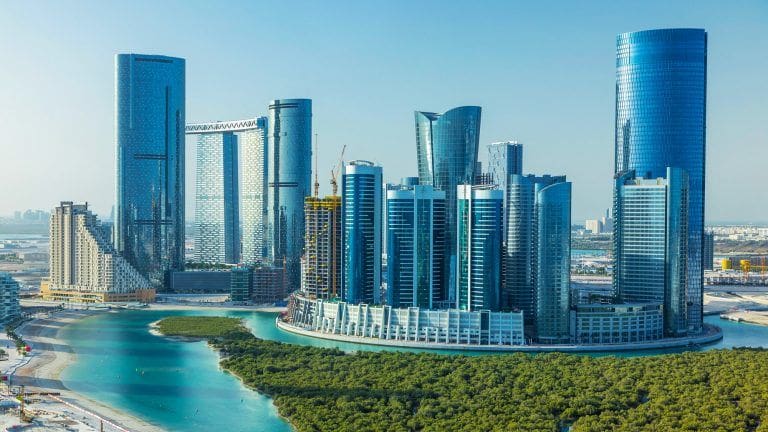
Al Reem Island: Abu Dhabi's Highest-Volume Investment Zone
Al Reem Island is Abu Dhabi's most active investment zone for residential leasing. With a current supply of 25,771 apartments and 395 villas, it has the largest apartment stock of any investment zone and, together with Al Danah, anchors the city's rental market. In 2025, it ranked in the top 3 for residential sales value, with roughly 75% of purchases made by expatriate residents.
New lease prices in Al Reem are rapidly rising: AED 1,391/sqm at Reem Nine, AED 1,358/sqm at Radiant Square, and AED 1,258/sqm at One Reem Island, representing a 21% increase in investment zone apartment rents year-over-year. The pipeline brings 9,757 units by 2030, with projects such as Reem Hills and Mayar adding villa stock in the ready segment priced AED 10K–16K/sqm.
Al Reem Island has the highest tenant-to-owner ratio among Abu Dhabi's investment zones for apartments, making it the emirate's most landlord-active district. Investors buying here are acquiring into Abu Dhabi's largest rental pool, with new lease rates now exceeding AED 1,200/sqm at top projects and investment zone apartment rents up 21% year-over-year.
Al Raha Beach (Al Rahah): Established Expat Area
Al Raha had the highest expat buyer share of any major district in 2025, at nearly 84%, indicating the area's role as a residential base for Abu Dhabi's professional expatriate community. With 10,788 investment zone apartments and 422 villas, as well as a lease market of AED 1.13 billion, Al Raha is frequently ranked as one of Abu Dhabi's top five lease districts by value.
The lease profile is mature: apartments command AED 800–1,200/sqm in active leases, with a ready sales market ranging from AED 15K to 34K/sqm depending on the project. Al Raha is positioned between the Established Core and Luxury Waterfront categories. Infrastructure is solid and the closeness to Abu Dhabi International Airport increases rental demand from aviation and logistics sector workers.
Khalifa City: The Villa Belt
Khalifa City is the main villa-focused investment zone within Abu Dhabi's established areas. Out of 20,554 residential units, 11,341 are villas and townhouses, making up 55% of total supply. Because of this, the area has become a reference point for villa rental demand in the emirate.
Its total lease market stands at AED 1.28 billion, with AED 930 million coming from villa rentals alone. That makes it the largest villa leasing market in Abu Dhabi by value.
Prices sit in the mid-market range. Ready villas typically trade at AED 7K–26K/sqm. The wide range reflects the mix of older homes and newer projects within the investment zone.
By 2030, 3,543 additional units are planned (625 villas and 2,918 apartments), which will gradually increase the apartment share in an area historically dominated by villas.
Luxury Waterfront Markets
International brand architecture, premium positioning, and supply scarcity are the foundations of luxury waterfront districts. Saadiyat Island (Al Saadiyat) has the highest rates per square meter in the emirate, with apartment sales at Four Seasons Private Residences surpassing AED 93K/sqm. Yas Island maintains pricing integrity throughout its golf and seaside communities while delivering volume at scale. Together, these two districts captured 59% of all FDI sales and anchor Abu Dhabi's luxury property market.
Premium Positioning — FDI & Ultra-Luxury
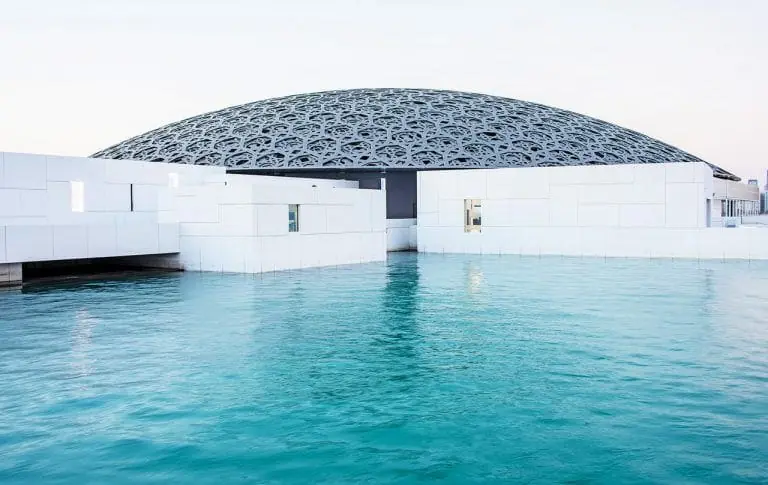
Saadiyat Island (Al Saadiyat): AED 13.7 Billion — 4× Growth Since 2022
Saadiyat Island is Abu Dhabi's top residential district. In 2025, it recorded AED 13.7 billion in sales, four times higher than in 2022, ranking first in the emirate. Demand comes from all buyer groups: Emiratis (AED 7.2B), resident foreigners (AED 3.4B), and non-resident FDI (AED 3.0B). It is the most international and the largest FDI-driven market in Abu Dhabi.
Prices vary significantly. Entry-level apartments start from AED 17K/sqm. Four Seasons Private Residences reach about AED 93K/sqm, Nobu Residences about AED 79K/sqm. Saadiyat Beach Villas trade at AED 20K–22K/sqm; The Row Saadiyat and Saadiyat Lagoons sit at about AED 17K/sqm. St. Regis Residences command AED 1,497/sqm in rent, the highest apartment lease rate tracked by ADREC. Investment zone rents on Saadiyat Island rose 21% year-over-year.
Off-plan apartment sales grew 125% in 2025, led by Mamsha Gardens (AED 2.1B), The Beach House (AED 1.9B), and Faya Al Saadiyat. The pipeline includes 9,128 new units by 2030 (7,458 apartments and 1,670 villas), positioning the district among the largest supply growth areas in Abu Dhabi.
Saadiyat Island is the only district in Abu Dhabi where branded residences such as Four Seasons, Nobu, and St. Regis reach prices comparable to ultra-prime global markets. About AED 3B in foreign investment is concentrated here, and new lease prices rose 21%, making it the emirate's strongest long-term capital preservation market for international investors.
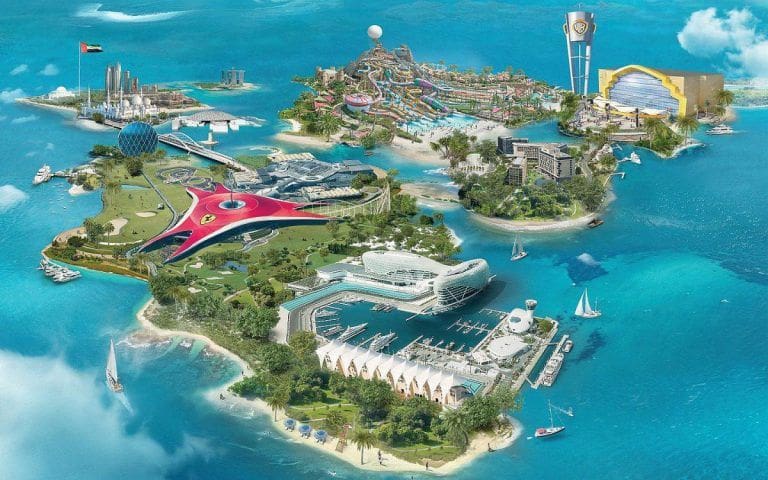
Yas Island: AED ~9 Billion — Lifestyle Premium at Scale
Yas Island accounted for about 12% of Abu Dhabi's residential sales value in 2025, up from 7% in 2022. Growth comes from expanding waterfront communities and strong lifestyle attractions such as Ferrari World, Yas Marina Circuit, Yas Mall, and Yas Beach. The island has 5,018 apartments and 3,562 villas today, plus 11,137 more units planned by 2030.
Prices place Yas in the luxury waterfront segment. Yas Links Luxury Living commands about AED 33K/sqm (the highest apartment rate on the island). Sama Yas, Yas Riva Residences, and Gardenia Bay cluster around AED 20K–27K/sqm. Yas Acres and Noya villas sit at about AED 12K–19K/sqm. On the rental side, Mayan villas achieved AED 1,317/sqm (the highest villa lease rate tracked for any Yas project), while Noya Viva and Water's Edge follow at about AED 1,090–1,109/sqm.
Yas is also an emerging office destination, adding roughly 20% of Abu Dhabi's new office space since 2022.
Yas Island has the emirate's largest pipeline, with 11,137 units planned by 2030. This presents an opportunity for early launch pricing, but the extra supply may slow down price rise compared to tighter markets like Saadiyat.
| District | Sales Value 2025 | Apt Price (Mean/Max) | Villa Price (Mean/Max) | Pipeline to 2030 | Off-Plan Share |
|---|---|---|---|---|---|
| Saadiyat Island | AED 13.7B | 32K / 108K per sqm | 21K / 91K per sqm | 9,128 units | |
| Yas Island | ~AED 9B | 19K / 50K per sqm | 15K / 43K per sqm | 11,137 units |
Source: ADREC – Abu Dhabi Real Estate Centre Market Report 2025
Emerging Growth Markets
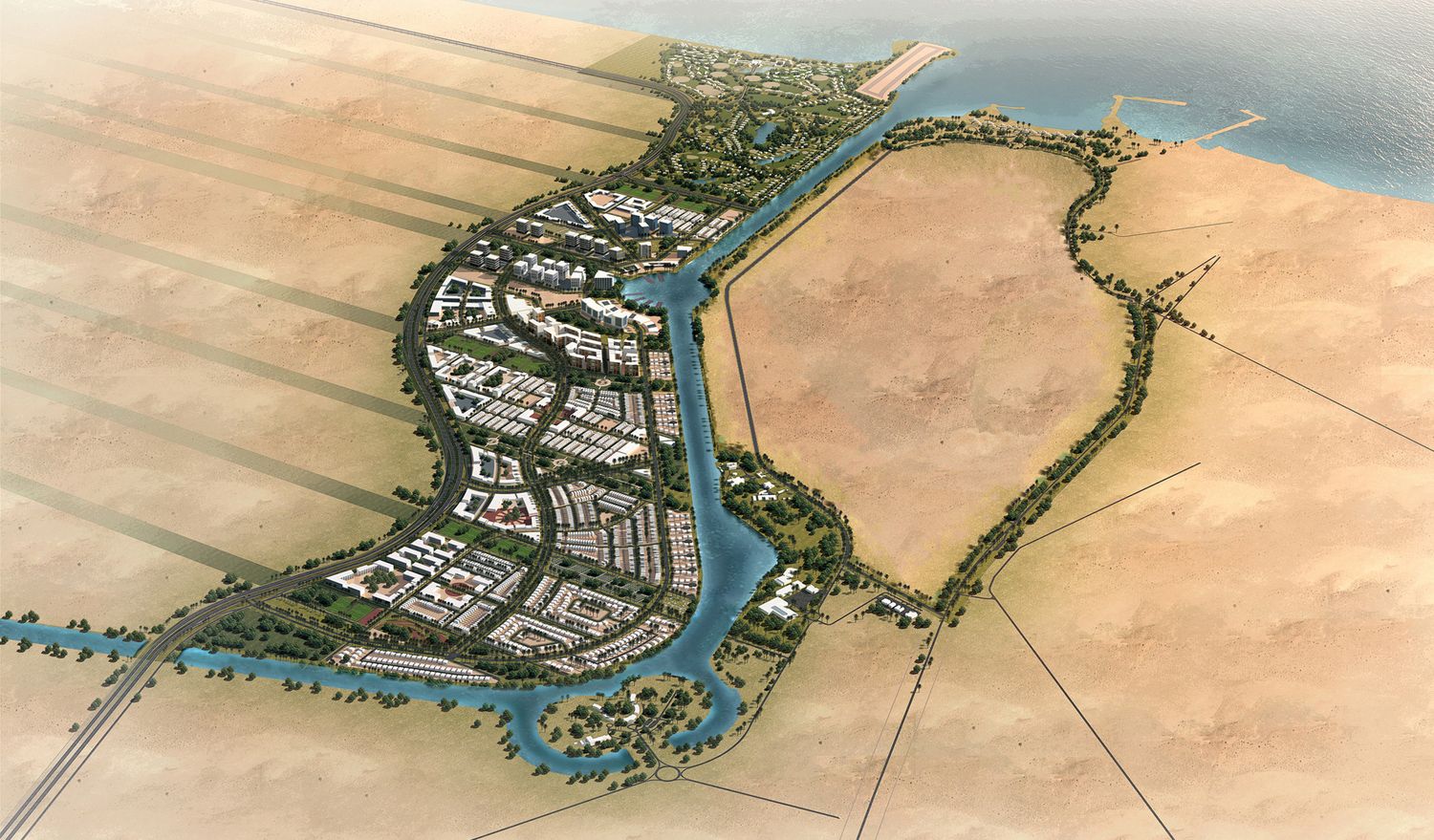
Most of the market's expansion in 2025 was fueled by Abu Dhabi's emerging districts. Hudayriyat Island (Al Hidayriyyat) quickly became the second-largest residential sales area in the emirate, reaching about AED 12.5 billion. New launches at Fahid Island, Al Bahyah, and Ghantoot also recorded strong early demand.
These areas share similar characteristics: most units are off-plan, early buyers are mainly Emirati, sales are tied to project launches, and large volumes of supply are scheduled through 2030.
Breakout Launches — Off-Plan Growth Districts
Hudayriyat Island (Al Hidayriyyat): 2nd Largest District in 2025
The 2025 market in Abu Dhabi is marked by the significant emergence of Hudayriyat Island (Al Hidayriyyat). A district with a nearly nonexistent existing supply generated ~AED 12.5 billion in residential transactions, ranking it second in the entire emirate by value. This was the result of the launch of three major projects: Al Naseem, Nawayef East, and Bashayer. These projects attracted significant interest from Emirati buyers (AED 6.9B) and resident expatriates (AED 5.1B).
Despite being a new launch market, the island's positioning (natural beach access, proximity to the Abu Dhabi city center, and Modon's infrastructure commitment) established a scarcity narrative. Villa sales are the most prevalent, with prices ranging AED 9K–33K/sqm depending on plot location and project. The island's development plan is primarily villa-oriented, as evidenced by the pipeline of 2,776 additional units through 2030 (536 apartments, 2,240 villas).
In this district, where there isn't currently a secondary market, investors are taking an early-stage position. Timelines for exiting will be longer than in Established Core markets. However, first-mover pricing and Modon's track record support a reasonable appreciation thesis for 5–10 year hold periods.
Hudayriyat Island ranking second emirate-wide from essentially no prior sales history is unprecedented in recent Abu Dhabi market data. The ~AED 12.5B figure is concentrated in a small number of projects with high Emirati buyer participation, historically a leading indicator of long-term government-backed infrastructure support for a district.
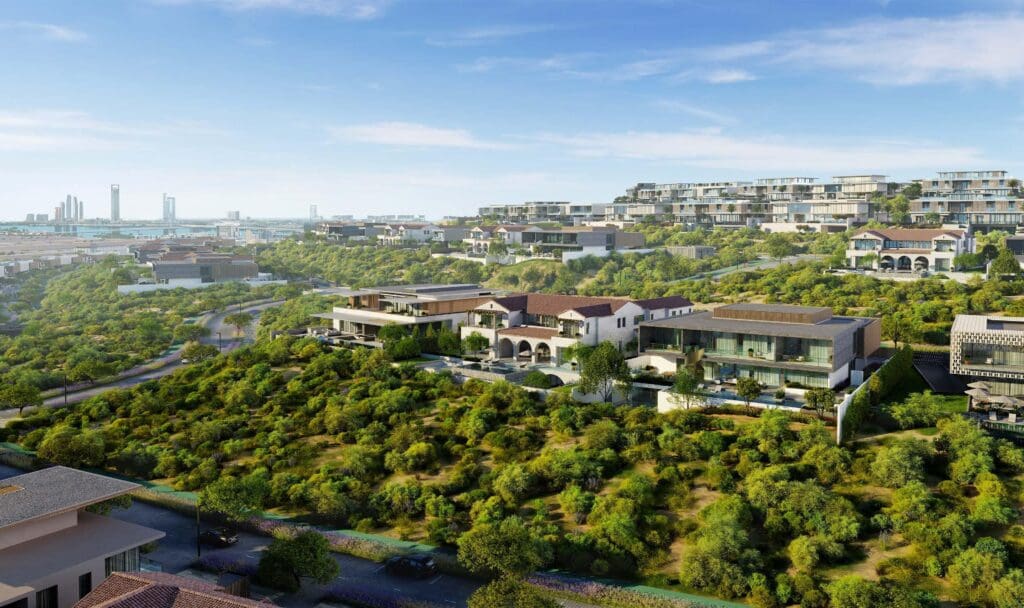
Fahid Island, Al Bahyah & Ghantoot: New Frontier Districts
Three additional districts delivered breakout results in 2025, all from new project launches in areas with minimal prior transaction history. Fahid Island generated roughly AED 5.5 billion, powered primarily by Fahid Beach Residences (AED 2.4B, apartments at AED 39K-56K/sqm), some of the highest apartment per-sqm values recorded outside Saadiyat Island. The island's 1,900-unit apartment pipeline through 2030 is entirely investment-zone-classified.
Al Bahyah produced roughly AED 5.9B in sales, almost entirely Emirati-driven (AED 4.2B), concentrated in Bal Ghaiylam (AED 2.6B) and Bloom Living (AED 2.2B). Villas in Al Bahyah sell at AED 6K-15K/sqm, making this the most accessible price point among Emerging Growth districts. The 570-unit villa pipeline through 2030 is modest, suggesting intentional supply control.
Ghantoot achieved roughly 4% market share in 2025, from a base of near-zero, driven by the Bayn project (AED 2.7B) with villa prices at AED 20K-30K/sqm. That is premium positioning for an emerging district, implying developer confidence in Ghantoot's long-term appreciation based on its coastal Abu Dhabi-Dubai corridor location.
Who Builds Abu Dhabi's Future Supply
Eight major developers account for about 74% of all residential projects planned in Abu Dhabi through 2030. Aldar leads the market with AED 30.8B in 2025 sales, followed by Modon at AED 17B. Around 80% of upcoming homes come from new development projects, while building permits make up the remaining 20%.
Most future supply is concentrated in five districts (Yas Island, Al Reem Island, Saadiyat Island, Zayed City, and Khalifa City), together representing 68% of planned units.
+19% Apartments, +13% Villas: Price Growth Across the Market
Since the start of the current cycle, Abu Dhabi's home price indexes have grown at their fastest annual rates. Villa and townhouse sales prices increased 13%, while apartment sales prices increased 19%. New villa leases increased 14% and new apartment lease prices increased 21% in investment zones, exceeding the emirate-wide averages of 16% and 7%, respectively. Since the first quarter of 2020, the average price of a villa has gone up by roughly 63%.
| Metric | 2024–2025 Change | Scope |
|---|---|---|
| Apartment sales price | +19% | Abu Dhabi Region |
| Villa / townhouse sales price | +13% | Abu Dhabi Region |
| Apartment new lease price | +16% | All zones |
| Apartment new lease price | +21% | Investment zones only |
| Villa new lease price | +7% | All zones |
| Villa new lease price | +14% | Investment zones only |
| Cumulative villa price growth since Q1 2020 | +63% | Abu Dhabi Region |
Source: ADREC – Abu Dhabi Real Estate Centre Market Report 2025
Investment zones are the center of both rent growth and new supply. Early buyers (2022–2023) already benefited from both capital appreciation and rental growth. Going forward, performance will depend more on entry pricing and project selection as values align closer to replacement cost.
Top 10 Developers — 83% of Total Sales Value
Abu Dhabi's residential market is highly concentrated. The top 10 developers generated ~AED 63B (83% of sales), and Aldar alone accounted for AED 30.8B, about 40% of the market. Tracking major developers and their launches is therefore as important as monitoring district trends.
| Rank | Developer | Sales Value 2025 | Market Share |
|---|---|---|---|
| 1 | Aldar | AED 30.8B | ~40% |
| 2 | Modon | AED 17.0B | 22% |
| 3 | OGA | AED 2.7B | 4% |
| 4 | Lead Development | AED 2.4B | 3% |
| 5 | Bloom | AED 2.4B | 3% |
| 6 | SAAS Properties | AED 2.1B | 3% |
| 7 | Reportage Properties | AED 1.7B | 2% |
| 8 | Taraf | AED 1.4B | 2% |
| 9 | Radiant Real Estate | AED 1.3B | 2% |
| 10 | Manazel | AED 1.0B | 1% |
Source: ADREC – Abu Dhabi Real Estate Centre Market Report 2025. Top 10 = 83% (~AED 63B) of total residential unit sales.
Matching Market Tier to Investment Thesis
Given the rapid expansion of Abu Dhabi's investment zones in 2025, the selected tier should reflect your holding period, liquidity needs, and comfort with off-plan delivery timelines.
- Deepest rental pool in the emirate
- Ready-market liquidity from established supply
- Apartment new lease prices +21% in investment zones
- Exit within 2–4 years supported by comparable sales
- Best fit: yield-focused, multi-unit portfolios, Golden Visa eligibility
- Highest per-sqm prices and branded residence premium
- Dominant FDI destinations — 59% of all non-resident FDI
- Off-plan at 80–85% of transactions
- 5–10 year hold for full appreciation thesis
- Best fit: capital preservation, lifestyle ownership, international investors
- First-mover pricing before secondary market matures
- Almost entirely off-plan — no ready-market liquidity yet
- High Emirati demand signals infrastructure commitment
- 10+ year thesis for full community buildout
- Best fit: early-stage capital appreciation, patient investors
Matching Market Type to Investment Thesis
Abu Dhabi recorded 23,600 residential transactions in 2025 across segments with different market dynamics. Investment zones, where foreign freehold ownership is permitted, are set to receive 79% of new supply through 2030. The key decision is selecting the tier that aligns with your investment horizon.
- You need rental income from year one
- You want exit flexibility within 3–5 years
- You're building a multi-unit portfolio
- You prioritize pricing transparency over appreciation upside
- You want exposure to Abu Dhabi's deepest tenant market
- You're placing capital for 5–10+ years
- You want branded residences with scarcity premium
- You're seeking ultra-prime positioning matching global benchmarks
- You can accept lower near-term liquidity for appreciation
- You want access to the emirate's primary FDI market
- You're positioning ahead of secondary market formation
- You want first-mover pricing before community infrastructure matures
- You hold a 10+ year horizon
- You can accept minimal resale liquidity during delivery
- You're tracking Modon and Aldar pipeline commitments as proxies for area development certainty